


Where were you when you heard Ritchie Blackmore performed a “shocking reunion” with Deep Purple last Wednesday?
Actually, let’s take a step back: Did you know Deep Purple still toured?
Or, stepping further back: Did you know founding guitarist Blackmore split acrimoniously from the group 33 years ago? They didn’t even reunite for their Rock & Roll Hall of Fame induction in 2016, but apparently a gig at Jones Beach was too good to pass up.
I mention it because Blackmore is the reason the band isn’t called Sugarlump. After forming in the late ’60s, they briefly performed under the name Roundabout. When the members decided to change it, they wrote a list of possible replacements on the wall of their practice space north of London. As keyboardist Jon Lord told The Independent in 2012:
“It was very nearly Orpheus. Concrete God we thought was a bit radical. Sugarlump was on there. One morning, Deep Purple was on it. After intense interrogation it turned out that Ritchie had put it up. It was his grandmother’s favourite song.”
Sugarlump is terrible, but honestly that name wouldn’t have made the cover of In Rock any more ridiculous.
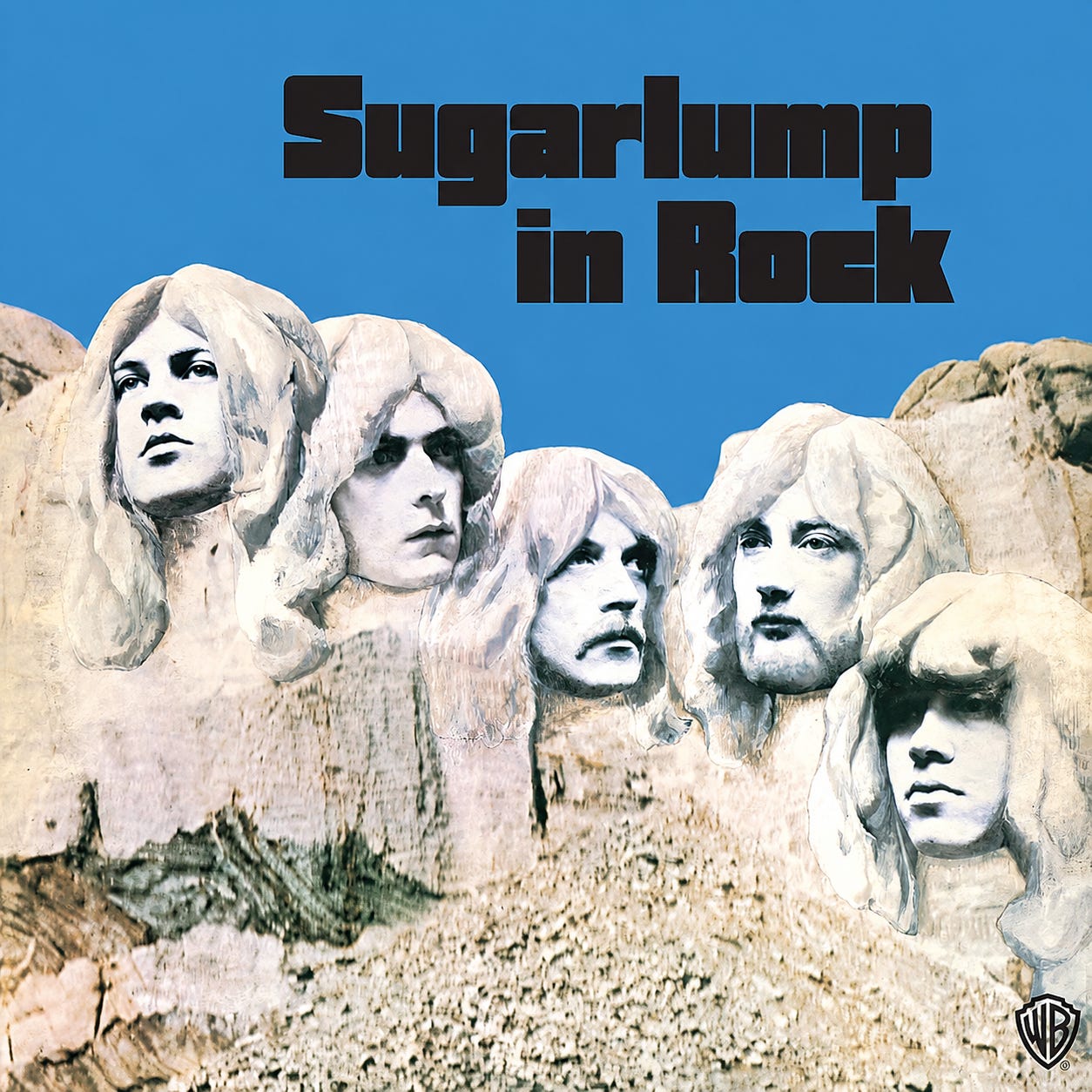
This extended Deep Purple vamp is an overlong tee-up for the second installment of Almost Named, where we look at the names groups almost went by or used for a short time before settling on the one that made them famous. Who knows how many grandmas were secretly pulling the strings?
Thunderfuck → Metallica
Well maybe not for this one. In a 2001 Playboy interview, Lars Ulrich said the band had a list of 20 potential names. Among them: Nixon (?), Helldriver (sure), Blitzer (too close to Santa’s reindeer), and Thunderfuck. “I was really keen on Thunderfuck,” Ulrich said. He was more keen on a different name. Appearing on NPR’s Wait Wait…Don’t Tell Me! in 2017 (???), he repeated the well-worn story of meeting some fellow metalheads at a kegger in San Francisco in spring 1981. One of them was starting a fanzine and had some name suggestions. “He asked me whether he should call the fanzine Metallica or Metal Mania, so I suggested that he call it Metal Mania.” Lars pocketed the name Metallica, because Lars has always been Lars.
Sigma 6 → Meggadeaths → Leonard’s Lodgers → The Spectrum Five → The Screaming Abdabs → The Tea Set → Pink Floyd (more or less)
Untangling Pink Floyd’s myriad names is an undertaking, and one with no definitive answer—even the surviving members of Pink Floyd, now in their 80s, can’t keep the chronology straight. “There were more names than gigs,” said drummer and co-founder Nick Mason in an interview with Sonic Reality. They also went back and forth between the Tea Set and the Pink Floyd Sound for a bit, because sure why not.
The classic Pink Floyd lineup cohered in 1965 during the Tea Set era, but we must acknowledge how scattershot the band’s other names were. While I can’t find explanations of Sigma 6 or Meggadeaths/Megadeaths/Megadeath1, the others are relatively straightforward:
The Screaming Abdabs: Old British slang for extreme anxiety. Roger Waters also claimed they went by “the Architectural Abdabs,” because he and Nick Mason were studying architecture during this time.
Leonard’s Lodgers: Mike Leonard was a friend who rented his flat to Mason and Waters.
The Spectrum Five: Less sure about this one, but the prevailing wisdom is that it’s a reference to their five-member lineup. And, judging by the iconic cover of Dark Side of the Moon, these guys loved spectrums.
The Tea Set: Well, they were British, but it’s also a play on the T-square and set square, drafting tools used by architecture students at the time.
The story goes that the group abandoned the Tea Set when they played a gig with another band going by that name, because England. The band’s legendary lost soul Syd Barrett was inspired by the names of old blues musicians Pink Anderson and Floyd Council to create the Pink Floyd Sound, which became the Pink Floyd, and then just Pink Floyd.
This is exhausting. No wonder Barrett freaked out and lived the rest of his life in seclusion.
Skid Row → Pen Cap Chew → Bliss → Ted Ed Fred → Nirvana
Considering the narrative that Nevermind laid waste to hair metal, it’s hilarious that Nirvana’s original moniker is most associated with these guys.
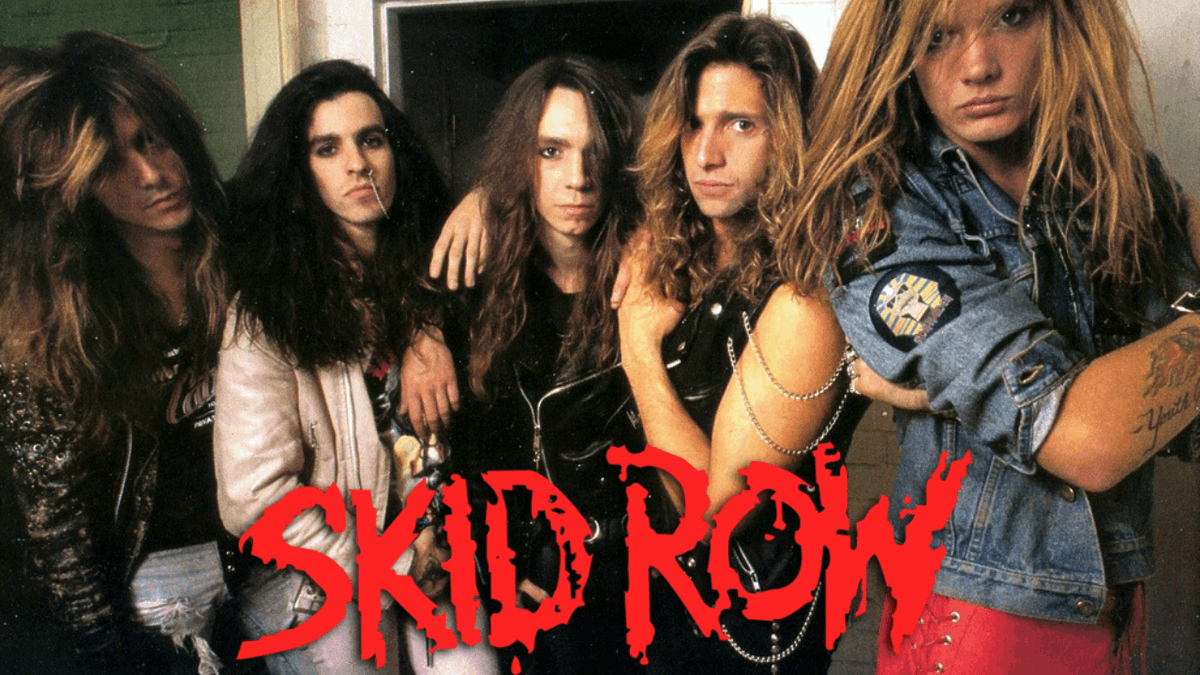
To be fair, the “18 and Life” Skid Row formed in 1986, and Kurt Cobain and co. started using it in 1987. It was their first “real” name after Cobain’s fits and starts with other projects, like Fecal Matter (classic) and another called the Sellouts, which played Creedence Clearwater Revival songs to please rednecks in Aberdeen, Washington.
Before debuting as Nirvana in March 1988, the band cycled through names like Pen Cap Chew, Bliss2, and Ted Ed Fred, but Cobain had a bunch of ideas for others in his journals, most of which seem like jokes, not contenders. The documentary Cobain: Montage of Heck highlighted them.
It’s a long road from Fecal Matter to Nirvana, and Cobain traced his band-naming journey on the flyer for the band’s first show as Nirvana.
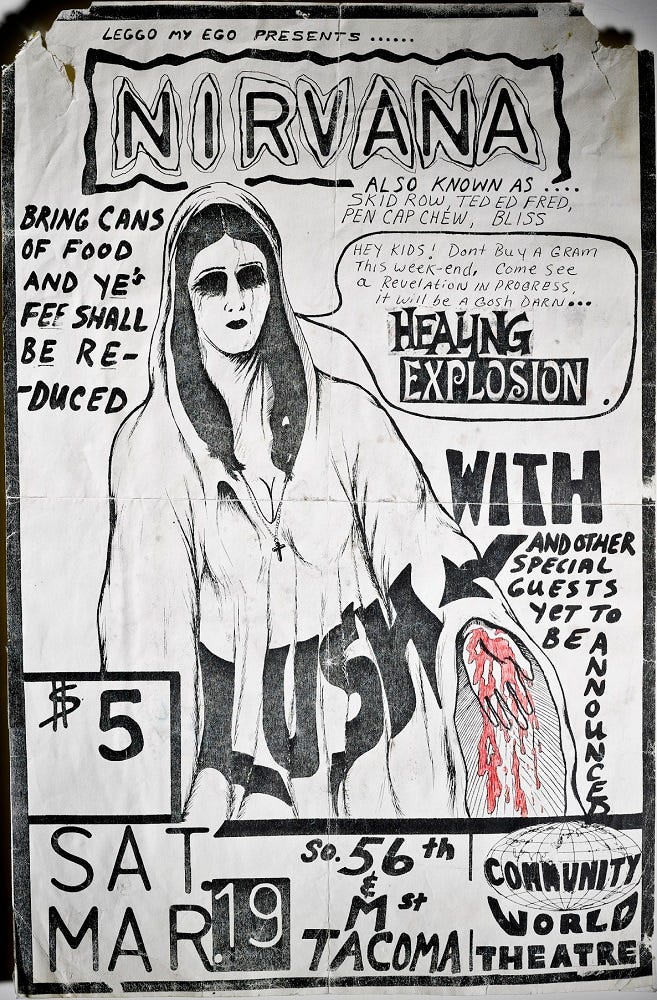
As he’d later tell Michael Azerrad in Come as You Are: The Story of Nirvana: “I wanted a name that was kind of beautiful or nice and pretty instead of a mean, raunchy name like Angry Samoans. I wanted something different.”
Quick aside: Of all the mean, raunchy names in the punk world, he chose the neither mean nor raunchy Angry Samoans? He had the Butthole Surfers and Millions of Dead Cops on his famous list of favorite albums!
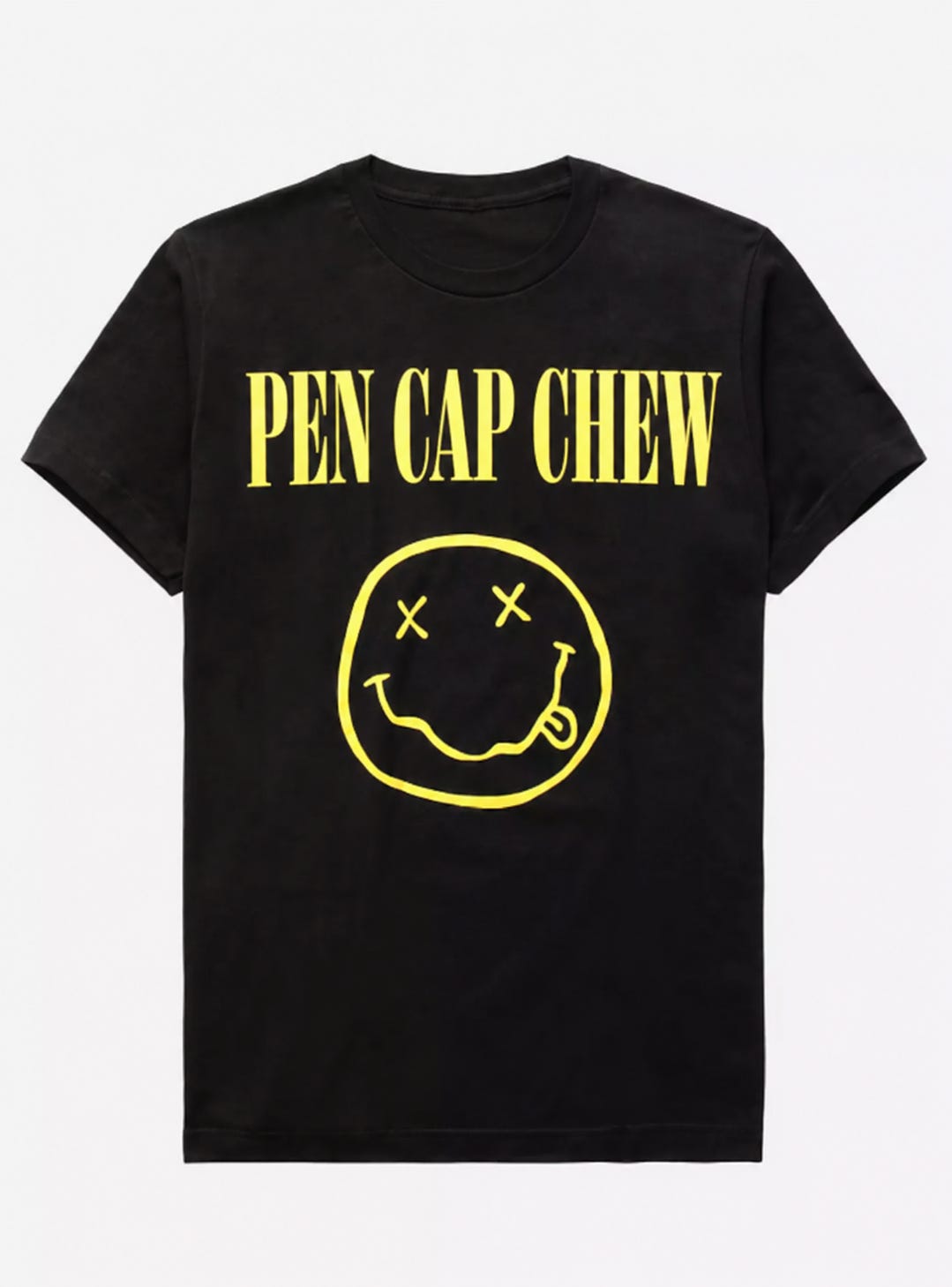
Regardless, he soured on Nirvana, as restless creatives like Cobain are wont to do. “It’s too esoteric and serious,” he says in Come as You Are. Fair enough, though I don’t think you’d still see kids walking around in Pen Cap Chew shirts 30+ years after his death. Wait, no, that name actually works better with this famous Nirvana design.
Big Fat Noises → Starfish → Coldplay
In an episode of Carpool Karaoke (strike one), James Corden (strike two) asks Chris Martin (strike three) if the band was ever called something else, and Martin says, “We were called Starfish for one concert,” and the audience laughs, as if to say, “Ho ho, ‘Starfish’? How ridiculous!” A) It’s not. B) Dig a little deeper, and you’ll find the actual ridiculousness.
For instance, the internet says the original partnership between Martin and guitarist Jonny Buckland coalesced around the unquestionably terrible name Pectoralz. Martin has since dismissed that as a myth, saying it was just a joke—which makes more sense, but since when has any of this been logical?
Debs Wild and Malcolm Croft’s effusive book Life in Technicolor: A Celebration of Coldplay doesn’t mention Pectoralz, but confirms the existence of a name that’s just as ridiculous: Big Fat Noises. Even then, it’s just mentioned in passing—and again, Starfish is treated like it’s strange. “Unfortunately, we were called Starfish,” says drummer Will Champion in the book. “There’s not much to say about that, other than I’m glad we changed the name!”
Dude, you were called Big Fat Noises. How on Earth is Starfish worse? Am I being gaslit?
Neither name lasted long, and the selection of Coldplay follows that well-worn trope of “chosen in haste for a live performance.” The moniker originated with friend-of-the-band Tim Crompton, who had it on the list of potential names for his own group. It came from a book of poetry by Philip Horky called Child’s Reflections, Cold Play.
Crompton and his bandmates disliked it and settled instead on the Bettina Motive (?), but Martin et al. played their first show in February 1998 under the name “the” Coldplay. Like Big Fat Noises, “the” didn’t last long.
POST-SCRIPTS
Other things Ulrich was keen on, according to that interview? “Girls would come on the bus and just blow the whole bus. Like, ‘OK, here’s two girls, everybody get in line.’ People would say, ‘Eww, she just blew that other guy…’ So? You don’t have to put your tongue down her throat.” To be fair to Lars—and WON’T SOMEBODY think of Lars?!—his bandmates were happy to participate.
My “strike three” comment aside, I don’t have a problem with Chris Martin or Coldplay. (James Corden is another matter.) I’m old enough to remember when “Yellow” was getting a lot of love from my peers who now find everything Coldplay does mortally cringe.
The link to Dave Mustaine’s legendary thrash band is coincidental. Mustaine was inspired by campaign materials for former Senator and 1984 presidential hopeful Alan Cranston. Cranston was very concerned about the U.S./U.S.S.R. arms race, calling the weapons an “arsenal of megadeath.” (Mustaine quotes it in the song “Set the World Afire”).
“I was high on acid one night,” Cobain explained to Michael Azerrad.